
Categories
Action Public Health

We Lost a Superb Activist for Women’s Health

I attended an international family planning meeting in Santo Domingo, the Dominican Republic, in 1984. At that time we were living just a short plane ride away in Puerto Rico.

The meeting was full of people from different countries speaking different languages and was an excellent opportunity to make connections in the family planning world. One person was outstanding.

I was chatting with someone one afternoon and mentioned that I was tired and was headed back to our hotel to take a nap. “You should stay and listen to the next speaker, Malcolm Potts. He is amazing, mixing a lot of knowledge with a bunch of British humor”.

I took their advice, and was not disappointed. Dr. Potts was a world leader in family planning. He died this spring at age 90.

Potts was an innovator. He helped to start the first clinic in Cambridge, England, that offered birth control to young people. He was also the first director of the International Planned Parenthood Federation. He collaborated with Dr. Karman, a psychologist, to develop a simple technique for treating miscarriages and performing early abortions. It uses a flexible cannula with vacuum created by a syringe, thus it is especially useful in places where there is no electricity. Although I learned the Karman method long ago, only by reading it in an obituary of Malcolm’s did I realize that he had aided in its invention.

Potts told me how he had helped with another innovation. The work of Henry David, a psychologist, is often quoted to help justify abortion. David studied children born to women twice denied abortion for the same pregnancy. He followed these kids for 20 or more years. The studies unequivocally showed that the children of unwanted pregnancies did not do as well as matched controls. Potts told me that it was he who suggested David study unintended pregnancies in Prague, Czech Republic, because they had stringent laws limiting who could have an abortion at that time.

In 1984 I interviewed for a job where Potts was the director. It had been called the “International Fertility Research Program”. Potts had realized that the name was long and might prejudice some people against the organization, so had it changed to the more copacetic “Family Health International”.

More recently Potts was the inaugural director of the Bixby Center for Population, Health, and Sustainability, and held an endowed chair at the Berkeley School of Public Health. He was an admired professor and used his imagination to innovate: his nonprofit, OASIS, advances education and choice for women and girls in the African Sahel. He also cofounded a company that is trying to bring birth control pills to the marketplace without the need for a prescription.

My favorite saying of Potts dates from the era when tobacco was sold in vending machines: “Birth control pills should be available in vending machines and cigarets only by prescription.” His wish has come partly true—now cigaret sales are much more restricted and reproductive health materials are available in vending machines. Many college campuses have machines that dispense condoms, pregnancy tests, emergency contraceptive pills and now, even Opill, the new over-the-counter birth control pill without estrogen (see photo above).

Potts was a pioneer in lowering barriers to reproductive health care. For instance, he set up a clinic at a central train station in India to perform vasectomies because people feared hospitals. He was known for this sort of imaginative, out-of-the-box thinking.

One of his coworkers, Alisha Graves, stated that Potts believed “We really have to trust that women are doing the best things for themselves and their families.” It took me years to come to the same conclusion.

© Richard Grossman MD, 2025
Categories
Abortion Public Health Reproductive Health

The Truth about Abortion

          Dr. C. Everett Koop was President Ronald Reagan’s Surgeon General for most of his 2 terms. An excellent pediatric surgeon, Dr. Koop had very strong anti-abortion beliefs, consistent with Reagan’s.

            Reagan asked Koop to research the psychological and physical harm that abortion does to women. When Koop did not find the substantiation he had expected, he refused to publish his findings. He is reported to have commented about the value of studies done by antiabortion people, mentioning ”… the poor quality of their research evidence….”

            When the report was made public, Koop stated: ”There is no doubt about the fact that some people have severe psychological effects after abortion, but anecdotes do not make good scientific material.”

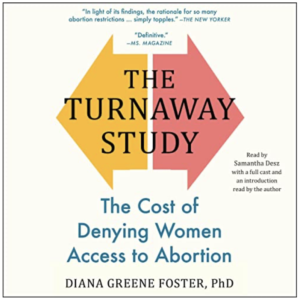
            The world needed to wait more than 30 years to get good scientific evidence about abortion’s lack of psychological damage to women. Dr. Diana Greene Foster and a team of social scientists at the University of California, San Francisco, have finally done the research that was needed to determine the sociological and psychological safety of abortion. Their findings are good news for women.

            The physical safety of abortion had already been determined. Despite what some people think, having an abortion is much, much safer than giving birth. It was only the psychological and economic effects that were in question in Koop’s era. 

            The work of Dr. Foster and her group is outlined in a short TED talk, “What Happens When We Deny People Abortions?” In addition, her book The Turnaway Study (2020) is very readable; it intermixes their findings with short case histories of study women.

            What is the best way to investigate the effect of abortion on women? You need to compare two sets of women. One group would be women with unintended pregnancies who had abortion care. The other group would also want to abort their pregnancies, but not be able to do so. Foster and her group found these two groups, and carefully followed each woman for 5 years. They recruited women from abortion clinics all over the USA. Each clinic has a gestational limit. Members of the first group were just under that limit; women had their desired abortions. Women in the control group were less fortunate. They were just over the limit, so could not have an abortion, and the nearest clinic where the abortion could be performed was too far away for them to travel. They were turned away and later delivered.

            The findings were conclusive:

  • Most women who have an abortion do not regret having had it.
  • Having an abortion did not tend to cause psychological harm.
  • Women who wanted an abortion, but did not receive it, had an increase in poverty.
  • Being denied an abortion makes it more likely that a woman will stay with an abusive partner, and more likely that a woman will be a single parent without family support.
  • Children born as a result of abortion denial are more likely to live below the federal poverty level and experience poor maternal bonding.
  • More than half of women who seek abortions are already parenting children. This study found that the financial wellbeing and development of these older children are negatively impacted when their mothers are denied abortion.

          Let’s hope that there will be no more deceit about abortion. Not only does abortion help women, but it also helps the children who preexisted the aborted pregnancy, or who were born after. The saddest finding of the Turnaway Study is that two of the women who were forced to carry unintended pregnancies died as a result of those pregnancies.

©Richard Grossman MD, 2024