Categories
Abortion Public Health Women's Issues

Work Around New Antiabortion Laws

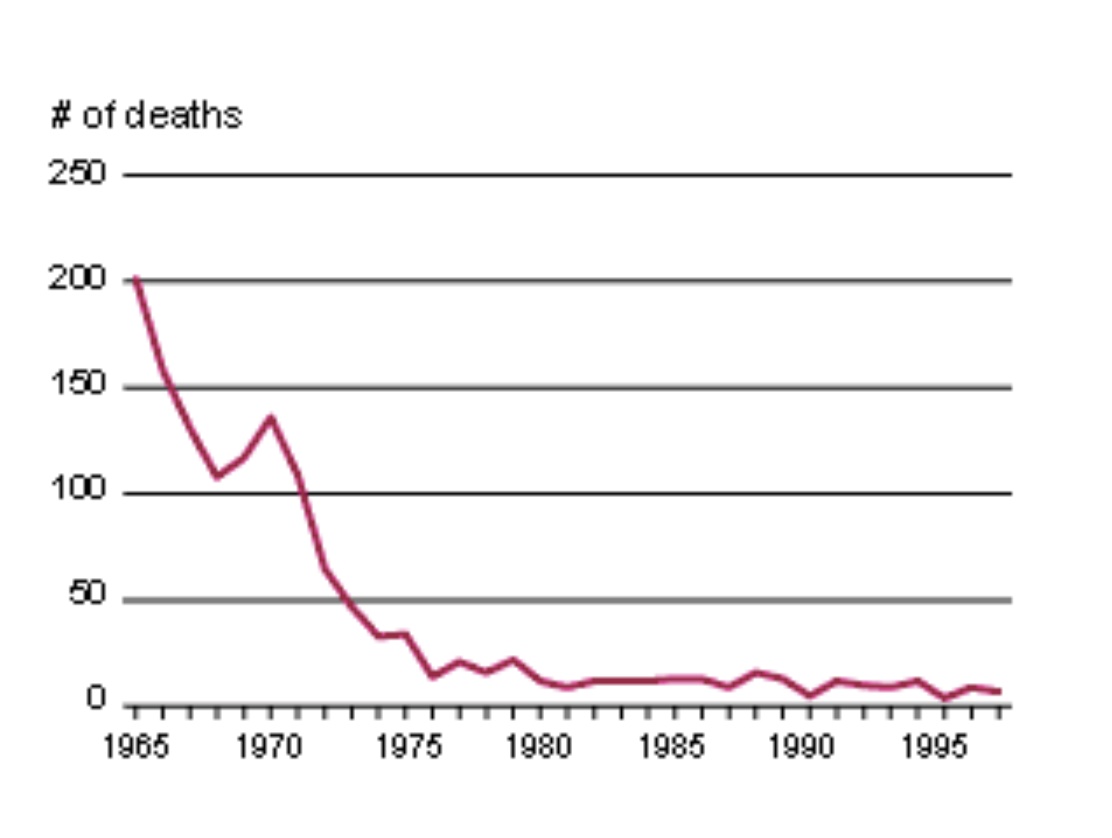
Number of Maternal Deaths from Abortion, data from the Guttmacher Institute

            Abortion has been practiced by all societies that anthropologists have studied. Most past ways of causing an abortion are either ineffective or dangerous—or both. Midwives prescribed herbs for centuries to cause abortion, but they can be fatal if the dose that is too large. Physical methods, like beating the woman’s swollen abdomen, were also frequent. Purposely falling down a flight of stairs was not uncommon. Perhaps the most frequent way of aborting a pregnancy in the 20th century, before Roe v. Wade, was to insert something into the uterus. Coat hanger wire or knitting needles were repurposed for this.

            Fifty years ago, when I was in general practice, I reviewed the chart of a woman in her 40s before meeting her. I learned that she had had a hysterectomy, then read the pathology report stating that there was a 6-inch splinter of wood found in the uterus.

            “How did it get there?” I asked innocently when I met her.

            “I don’t know” was her reply. Then it dawned on me.

            Other dreadful ways of attempting to terminate a pregnancy include douching with harsh chemicals, shooting the fetus while in the uterus, and suicide. The maternal mortality rate in the USA dropped precipitously in 1973 when the Supreme Court legalized abortion in all states. I fear that the Dobbs decision will cause an increase in our country’s already high maternal mortality rate.

            Death is not the only problem caused by making abortion illegal or unobtainable in many states. A good friend of ours had an illegal abortion in the 1960s, but was unable to conceive later when she was married. It is likely her unsafe abortion caused an infection that prevented the desired pregnancy.

            In the past, women in Chicago took abortion care into their own hands—literally. The Jane Collective learned how to perform abortions safely and did so in the apartments of willing tenants, thereby escaping police detection. A California psychologist, Dr. Karmen, helped women by developing aspiration instruments for “Menstrual Extraction”. To avoid the abortion laws, ME was done before pregnancy was diagnosed. And the Clergy Consultation Service, established in New York, referred women nationally to willing physicians for safe abortions.

            Since the Supreme Court’s Dobbs decision made it possible for states to outlaw abortion again, other ploys are being used to help women access safe abortions. Most take advantage of medication abortion, using 2 FDA-approved pills. Mifepristone and misoprostol are available by Internet; however, they are expensive and can take weeks to arrive. The advent of telemedicine has improved access in the USA.

            One plan is to have access to the medication available just over the border in a state that allows abortion. There is a new clinic in New Mexico, a few miles from Texas, so women can get the abortion pills if they cross the border. Planned Parenthood in Illinois will be providing the same service from a van for residents of Missouri and other neighboring states. Perhaps the most innovative work-around is in Arizona. Camelback Family Planning will perform the ultrasound and counseling, then the information is sent to a California doctor who then prescribes the medication. The woman picks up her pills at a post office in a California border town—all free, thanks to the Abortion Fund of Arizona.

            There are several funds that help women get to abortion clinics and also aid with the cost of abortion care, some local and some national. I donate to both Colorado’s Cobalt Abortion Fund and to the National Network of Abortion Funds—both are tax deductible.            

Almost 60 years ago the Clergy Consultation Service found ways around the laws that prohibited abortions. Now we have their experience, plus Internet and medication abortion. Although Dobbs is a setback, today women are better off than before Roe.

© Richard Grossman MD, 2022
Categories
Consumption Public Health Reproductive Health Women's Issues

Recognize Problems in Some African Cultures

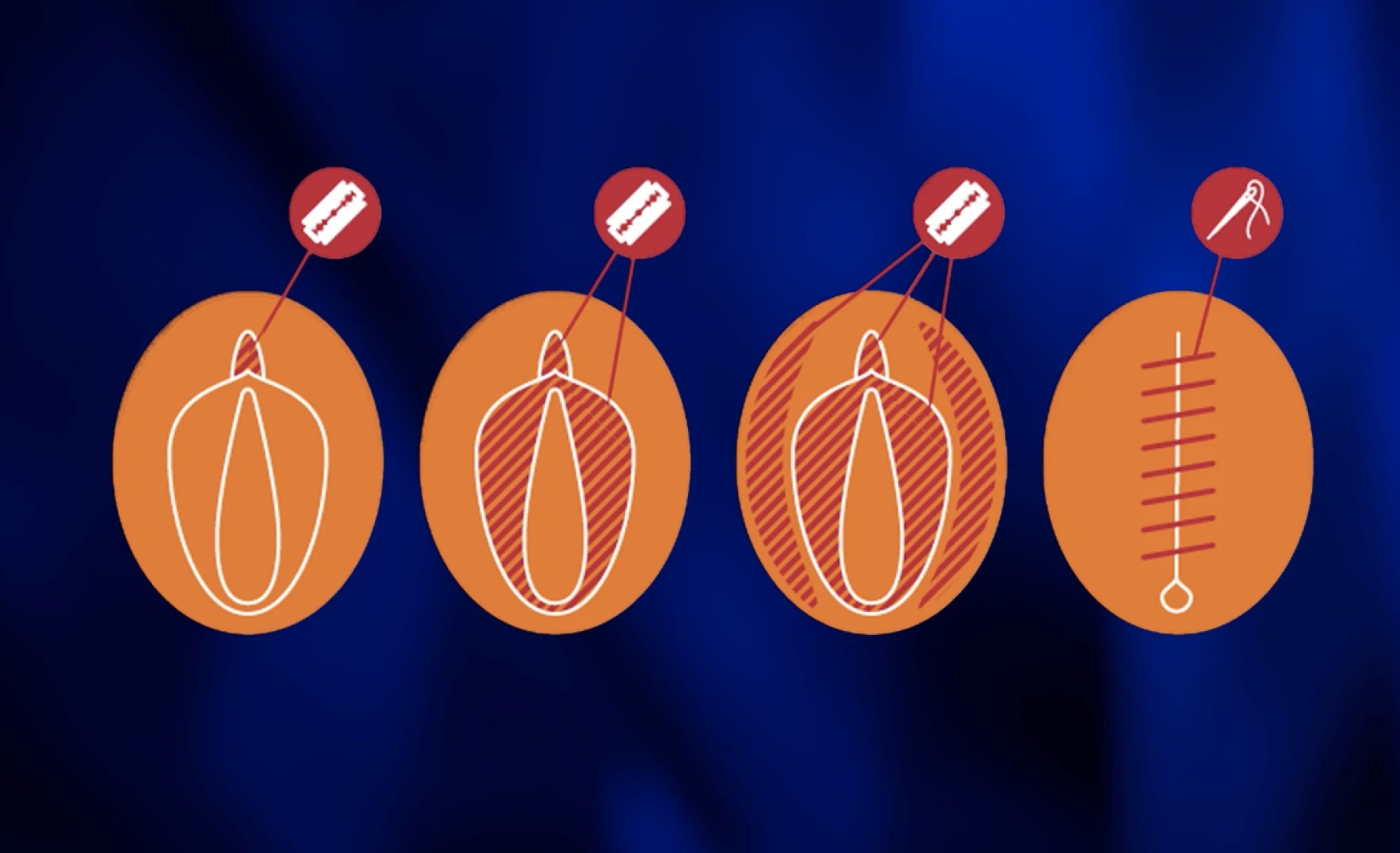
Different types of Female Genital Mutilation

            I have often heard that the need to reduce population growth in African countries is less important than in rich countries because consumption is so much lower in Africa. It is true that the impact of a person in Africa is much less than someone in a rich country, however there are important but different reasons for Africans to reduce their fertility.

            Although the average footprint of a person in Africa is small, there are already more feet than the land can bear in some places. Slowing population growth there will help people be healthier, happier and more productive. Traditions exist that are harmful to women and also lead to high fertility. These injurious traditions may have had their function in the past, but they have no place in the 21st century.

            In the past I was a cultural relativist. I believed that the practices in other cultures shouldn’t be evaluated by our standards. When I learned about Female Genital Mutilation, I changed my mind. If one believes that girls and women deserve the same respect as boys and men, one cannot be a cultural relativist.

FMG is practiced by many cultures in Africa. It consists of removing part or most of the external genitalia of girls. It is usually done without anesthesia and often with a dirty blade.When the margins of the vulva are separated by the (brutal) slicing, acacia needles are used to hold them together. Think of the agony FMG survivors suffer! Some victims die from blood loss or infection. The pain returns during intercourse and childbirth if the vaginal opening has been sewn nearly shut. Fortunately, there are many organizations in Africa that are working to get rid of FMG. Often they substitute another, more benign, coming-of-age ritual for girls.

            Child marriage is another damaging custom of some African cultures. Typically, the girl’s arranged marriage is shortly after she starts to menstruate, and she is forced to wed a man many years older than she. A girlchild is considered a burden in many societies, so the best way to get unburdened is to marry her off. Worse, rape of a young girl is not uncommon. Since virginity is a requirement for marriage in many societies, the girl’s parents force their daughter to marry her rapist. The pitiable girl is thus dominated by her husband for the rest of her life.

            The psychological effects on a girl who is married as a young teen must be terrible, however the physical effects can be fatal. Her pelvis may be too small to give birth if she conceives before her bones have finished growing. Obstructed labor may kill the fetus—resulting in a stillbirth. Sometimes pressure of the fetal head against the girl’s pelvis blocks blood flow to the girl’s tissues. The dead flesh dissolves, forming a hole through which pee and/or poop can pour.

            You might think that child marriage and FGM don’t exist in the USA, but that is wrong. Some immigrants practice both. In addition, some non-immigrant groups have allowed early marriage, often in response to early teen pregnancies. Delaware was our first state to ban marriage before age 18, only 4 years ago. Women who marry young tend to have more children and seldom advance far in education.

            Both child marriage and FGM are means of subjugating women; so is cutting short their education. Another way power is taken away from women is the absence of something we take for granted—clean and safe toilet facilities at schools. Many girls quit school after their period starts because their school lacks adequate, private toilet facilities.

            Where girls and women are treated as inferior, they have little control over their lives. They don’t have power over what happens to the most personal parts of their bodies, nor when or whom they marry. They may not say when they have sex, nor limit the number of children they bear, nor use contraception if they want to.

            Many organizations work to empower African women by putting an end to child marriage and FGM. One favorite is the Population Media Center, which has made great advances in education about these evils.

            Although I am not an anthropologist and have spent only a little time in Africa, these seem to be some reasons that the population is growing so rapidly there. In the future I’ll write about religions which encourage large families, and about overpopulation causing famine—one of the Four Horsemen of the Apocalypse. 

© Richard Grossman MD, 2022