Categories
Population

A Debate about the Future of Human Population

David Lam is a Professor of Economics at the University of Michigan and Director of the Institute of Social Research. He is highly respected and widely published in the field of demography. His elected positions include being past president of the Population Association of America and being elected to the Council of the International Union for the Scientific Study of Population (IUSSP). Lam is truly a giant in the field of demography, and deserving of all his many honors.

Dr. Lam published an essay last year in N-IUSSP, the IUSSP’s online news magazine. Titled “The world’s next 4 billion people will differ from the previous 4 billion“, it got me riled up because I felt that Lam ignored our human life-support system–the natural world. My response, “The world in which the next 4 billion people will live“, was also published by N-IUSSP. This sparked a third, “Global population, development aspirations and fallacies” and then a fourth essay, “Thinking about the future: the four billion question”.

Here are very short abstracts of the four essays. Since I’m doing the abstracting, the abstracts may not be totally objective!

  1. Dr. Lam notes that it took just 50 years to add 4 billion people to give us the 7 1/2 billion we have now, but that it will take until about 2100 to add the next 4 billion–and then growth will probably stop. Much of this growth will be in Africa, and the people will be older. He also believes about this population growth “… the experience of the last 50 years gives room for optimism about the world’s ability to support it.”
  2. I am less optimistic, fearing that we have already used so much of the planetary resources that there will be significantly less left for those who come after us.
  3. Dr. George Martine feels that I am overly optimistic about the ability of family planning to slow population growth. Unfortunately, I agree with him! Martine had 4 concerns about the prior 2 articles: “a) the urgency of environmental threats; b) the recognition of diversity in ‘population’; c) the limitations of fertility reduction solutions; and, d) the urgency of redirecting ‘development’.”
  4. I like the way this essay starts: “The ‘population question’, central to the debate about humankind’s future since the 18th century, has slipped away from center stage and fallen into a coma in recent years.” The essay takes a critical look at some of the factors affecting population and our ability to inhabit Earth. Dr. Livi Bacci looks at climate change caused by greenhouse gas emissions, and points out that it is not just population that has increased but also the financial ability of people to purchase and use carbon-based fuels–consumption.

I welcome folks to look at these four essays and draw your own conclusions. I first read Lam’s article because I am a member of the IUSSP and subscribe to N-IUSSP, but they are available online to anyone. Just search using their titles. You can even submit a response without being a member. It is good to have a debate on these subjects that are so important to our future!

Richard

 

Categories
Carrying Capacity Reproductive Health

Don’t Control Population this Way

Human skulls at the Nyamata Genocide Memorial

There are many ways to decrease human numbers, and most of them should be shunned. Indeed, some of them are quite horrifying. In this and subsequent columns I’ll write about some of them.

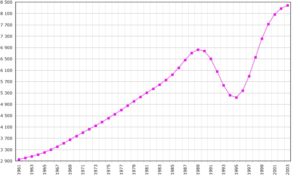
It has been more than 20 years since the Rwandan genocide, but it stands out in my mind as the worst episode of human slaughter in recent history. Estimates of the number of people killed in a terrible 100 day period range from 1/2 million to a million. The population of Rwanda at that time was less than 8 million; a huge proportion of this small country’s people killed each other. In addition, an estimated 2 million were displaced or fled the country.

Genocide is the intentional destruction of a national, ethnic, racial, or religious group. Theories about the causes of genocide include tribalism, autocratic rulers and lack of resources. An article about this genocide, “Remember Rwanda” by James Gasana was published in WorldWatch. Gasana is Rwandan and had held 2 different cabinet positions in that country. In this article he noted that murder was most common where people went to bed hungry. That hunger, contributed to by overpopulation, apparently was part of what fueled the killing

In 1994 Rwanda had an almost entirely agricultural economy and was overpopulated. As the population rose the size of landholdings shrank and the overworked land became less productive. Even if people wanted to limit their fertility, the predominant religion, Roman Catholicism, preached against “artificial” contraception.

That is in the past. With international help and amazing resilience, the Rwandan people have put that terrible part of their history behind them. However, another country appears to be enduring a religiously motivated genocide. The Rohingya people in Myanmar (Burma) are both an ethnic minority and, as Muslims, have different religious beliefs from the Buddhist majority.

Genocide Watch lists 10 stages that are seen in preparation for and carrying out a genocide: Classification, Symbolization, Discrimination, Dehumanization, Organization, Polarization, Preparation, Persecution, Extermination and Denial. Most of these stages can be seen with the treatment of the Rohingyas.

Although they live in Myanmar, the Rohingyas aren’t allowed citizenship—classification. While they are not forced to wear identifying symbols, their freedom is restricted in other ways. They must live in ghettoes and are restricted by curfews—organization and polarization. Mobs attack Rohingya settlements while officials offer no protection—preparation. “Security” forces have killed thousands of Rohingyas while others have been tortured, “disappeared” or have suffered rape—extermination. The country admits to no wrongdoing—denial.

Perhaps the most dire of the measures against the Rohingyas is limitation of their reproductive rights. While there is no limitation on other people in Myanmar, the Rohingyas are only allowed to have two children. Apparently the Muslims tend to have larger families than the Buddhists in the same area. The state officials’ reason for this limitation is to “…ease tensions between Buddhists and their Muslim Rohingya neighbors.” Even if this is the true motivation, legislating the number of children in a family is wrong.

Unfortunately, Myanmar and Rwanda are not unique; there are many historical examples of peoples being singled out and exterminated. In the chapter on genocide, “The Great Big Book of Horrible Things” tallies an estimated 32 million deaths from genocides in the past 3 millennia. This includes a huge but unknown number of indigenous people killed in the Americas when we Europeans invaded.

Currently there are several countries where genocide is happening or is very likely. These include South Sudan, Sudan, Syria, Yemen and the Democratic Republic of Congo, all of which have unstable governments and terrible records of civil rights.

What can we do to prevent genocide? In “Warning Signs of Genocide: an anthropological perspective” Drs. Gene and Barbara Anderson state that the most important protection against genocide is critical thinking—the process of independently analyzing, synthesizing, and evaluating information as a guide to behavior and beliefs. They have written a second book, “Halting Genocide in America”, in which they are concerned that some people in the USA are already taking steps along the road to genocide.

Genocide is perhaps the most vicious way to slow population growth, but there are several others on my list of means to reject. Nature tends to limit populations with disease and famine, over which we have only limited control. Some other ways of slowing growth are imposed by people and governments. These include eugenics, family size coercion, war, gun violence, and the Voluntary Extinction Movement. More about them in future essays.

© Richard Grossman MD, 2018

Graph showing dip in Rwandan population after genocide, followed by recovery.