Categories
Abortion Action Contraception Politics

Bills to Support in Congress

One of my former partners rephrased the Bible, saying: “what the lord giveth, the lord can take away.” I fear that he might be correct.

Supreme Court Justice Thomas concurred with the majority in the Dobbs 2022 decision, taking away the right to abortion care in all states. It is frightening that he stated, in that decision, that the Court should reconsider “Griswold”. “Griswold” was the 1965 decision which made contraception legal nationwide. Unfortunately, Thomas is not alone. There has been an undercurrent of right-wing people and politicians who feel that birth control should be outlawed. Perhaps they come from the religious viewpoint that “every sperm is sacred”, to quote Monty Python. Or perhaps they want more poor people to do the world’s scutwork so the rich can sit back and enjoy life.

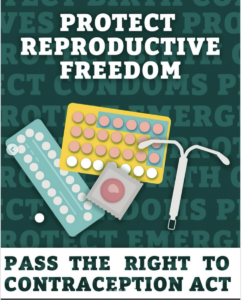
A bill in Congress intends to insure our right to contraception. Called the “Right to Contraception Act”, its short description states that the bill’s purpose is: “To protect a person’s ability to access contraceptives and to engage in contraception, and to protect a health care provider’s ability to provide contraceptives, contraception, and information related to contraception.”

This bill passed in the House in 2022. Unfortunately, it was blocked in the Senate two years later. Some Democratic senators are still trying to pass it. Senator John Hickenlooper wrote me: “…I am a cosponsor of the Right to Contraception Act and voted to advance the bill when it came to the Senate floor on June 5th [2025]”.

Legislators in at least four states have tried to limit access to contraception by various means. Some states have restricted public funding. Indiana law prohibits placing an IUD after a woman gives birth because of the misapprehension that IUDs cause abortions. In addition, some states have included some contraceptives, including emergency contraception, in their restrictive abortion laws. I wish that it were as easy to poke holes in these lawmakers’ condoms as it is to poke holes in their reasoning!

Colorado has legal support for our right to birth control, as do some other states. Ours is called “The Reproductive Health Equity Act” and is part of the 2022 law guaranteeing access to abortion care.

There is another glimmer of hope in Washington. Both houses of Congress have bills to stop the Global Gag Rule (GGR). This rule of law prevents any recipient of federal funding to discuss abortion. When women can’t find out about legal abortion services, often they seek unsafe abortions. Thus, the GGR is responsible for the deaths of thousands of desperate people.

The Global Health, Empowerment and Rights (Global HER) Act would reverse the GGR and prevent any similar act in the future. It would allow healthcare workers the freedom of speech to tell patients how to access safe abortion services. It would save lives of mothers and teenagers. 

According to the World Health Organization (in which the USA no longer participates): “Reproductive rights rest on the recognition of the basic right of all couples and individuals to decide freely and responsibly the number, spacing and timing of their children and to have the information and means to do so, and the right to attain the highest standard of sexual and reproductive health….”

Please contact your senators and ask them to support the Right to Contraception Act (S.4381). I suspect that all US senators have used contraception at some time in their lives; all Americans should have that right! Also, ask your senators and representatives to support the Global HER Act; that’s S.280 in the Senate and H.R.764 in the House.

©Richard Grossman MD, 2026
Categories
Contraception Hope Reproductive Health

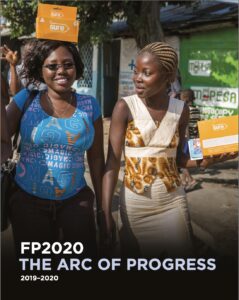
FP2020

  Why are these women smiling?

            What if every woman in the world had access to her choice of safe, effective contraception? So far, this is a dream, but two programs are helping this dream come true.

            In the past, only members of the rich elite had access to family planning (at least among English-speakers). Francis Place in England (1823) and Margaret Sanger in the USA (1916) brought Family planning to disadvantaged people. Sanger is accused of having racist or classist motivation, but Place, a revolutionary thinker, was a commoner. He learned how the rich controlled their fertility and spread that knowledge through a series of pamphlets. Both of these pioneers realized that limiting a couple’s fertility would be likely to improve their well-being.

            The London Summit on Family Planning in 2012 was organized to continue Place’s work, on an international scale. People gathered in London from 120 countries and included doctors, social scientists and financial donors who came up with an international program, Family Planning 2020 (FP2020). In those few years between 2012 and 2020 they hoped to provide 120 million women (and men) with contraceptive information and supplies.

            One of UN2020’s initial concerns was that it not coerce people to use contraception, as happened in China and India. Social scientists drew up rules to try to avoid any semblance of coercion—all motivation had to be strictly voluntary. Thus, there would be no undue incentives nor any quotas. These steps would help ensure that all adaptors of contraception did so without pressure. In the organization’s own words, it “…is a global movement that supports the rights of women and girls to decide—freely and for themselves—whether, when, and how many children they want to have.” It is amazing that FP2020 functioned in some very patriarchal societies in Asia and Africa.

            The governments of more than 30 of the world’s richer countries pledged money to support FP2020. Major funding included the US Agency for International Development, the Gates Foundation and the United Nations Population Fund. Although FP2020 worked in some of the least wealthy countries in the world, each of the 69 countries where they provided care also had to provide some funding.

            The Covid 19 pandemic started just as FP2020 was ending. Despite the risk of spreading the virus, the program found ways to deliver high quality reproductive health care. The program was able to continue its outreach using strict precautions.

            How successful was FP2020? The program fell short of its ambitions goal. The final tally is that it increased the number of modern contraception users by 46 million. Nevertheless, this is a pretty amazing feat! An impressive way of measuring the program’s success is that it doubled the number of users in 13 African countries. The use of modern contraception in these poor countries is estimated to have prevented millions of unsafe abortions and over a hundred thousand maternal deaths. What intervention could be more humane?

            Because populations were growing rapidly where FP2020 worked, the need for family planning increased faster than FP2020 could reach potential users. It is estimated that the number of women of reproductive age grew by 15 million each year! That is the challenge for the program that succeeded FP2020, unsurprisingly labeled “FP2030”. The successor has more local direction and less management from donor countries, and has expanded to 82 countries. Funding is its biggest problem, unfortunately, especially since some funders have reneged on promised donations. FP2030 is directing its focus on adolescent pregnancy. If a woman is empowered by modern family planning when she is young, it is likely that she’ll be a lifelong user.

There is a success story here. The teen pregnancy rate is already dropping globally, thanks to programs such as FP2020 and FP2030.

© Richard Grossman MD, 2024